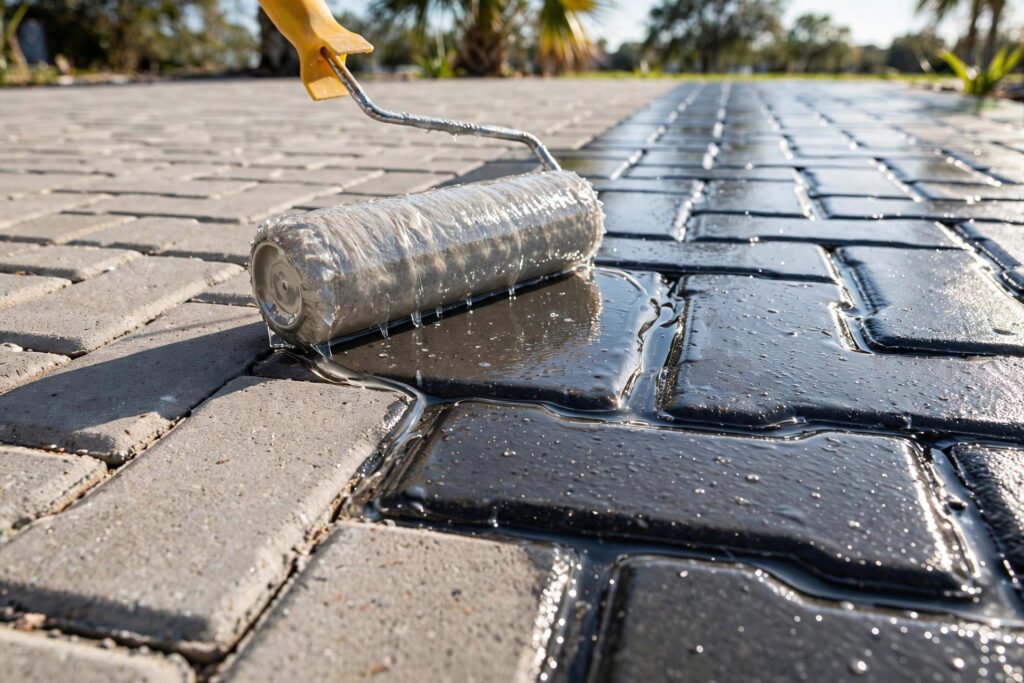
Paver sealing protects your driveway, patio, or pool deck from Florida’s sun, salt air, and daily downpours — locking in color, stabilizing the joint sand, and keeping stains on the surface instead of soaking in. In South Florida’s climate, most sealers last 2–3 years before needing reapplication.
Paver sealing is the application of a protective sealant over brick or concrete pavers — driveways, pool decks, patios, walkways — that shields them from water, stains, UV fading, weeds, and mold. In South Florida’s climate, it’s less of a luxury and more of basic maintenance. Unsealed pavers here don’t just look worse over time; they deteriorate faster.
Why Florida Pavers Need Sealing
Broward County is about as hard on pavers as anywhere in the country:
- UV exposure. The sun bleaches color out of unsealed pavers within a couple of years. Once the color’s gone, no amount of cleaning brings it back — only a color-enhancing sealer can restore it.
- Rain and humidity. Daily summer storms drive water into unsealed pavers and the sand beneath them. That erodes the base, causes shifting and sinking, and feeds mold and mildew growth.
- Organic staining. Oak leaves, palm debris, mulch, and fertilizer leave tannin and rust stains that soak straight into unprotected pavers.
- Weeds and ants. Open joints are an open invitation. Weeds root in the sand, and ants excavate it from below, leaving little sand piles and eventually wobbly pavers.
Sealer addresses all four at once: it waterproofs the surface, blocks UV, resists staining, and — combined with fresh polymeric sand in the joints — shuts weeds and ants out.
Natural Finish vs. Wet-Look Sealer
You get two choices, and they protect equally well — this is purely about appearance:
Natural (matte) finish. The sealer goes on invisible. Your pavers look exactly the same as they do clean and dry — just protected. Good choice if you like the current color, for pool decks where traction matters most, and for HOA communities with strict appearance rules.
Wet-look (color-enhancing) finish. Deepens and enriches the paver color with a subtle sheen — like the pavers look right after rain, permanently. Especially dramatic on pavers that have faded in the sun. Slightly slicker when wet than matte, so we discuss placement with you (driveways and patios: great; pool decks: let’s talk traction options).
Not sure which you want? We’ll show you both on your actual pavers before you commit.
The Sealing Process, Step by Step
- Inspection and prep. We walk the area, note stains, damaged pavers, drainage issues, and joint condition. Furniture and obstacles get moved.
- Deep pressure cleaning. Every square foot gets thoroughly washed — mold, mildew, algae, dirt, tire marks, and old joint sand debris all come out. This step determines how well the sealer bonds, so we don’t rush it.
- Drying time. The surface needs to be fully dry before sealing — typically 24–48 hours after washing depending on weather. We schedule accordingly.
- Joint re-sanding. Premium polymeric sand is swept into every joint, compacted, and the excess blown clean. This locks the pavers together and activates with moisture to form a firm, weed-resistant barrier.
- Sealer application. Two even coats of commercial-grade sealer applied with professional spray equipment and back-rolled for uniform coverage. Edges and detail areas get hand work.
- Curing. Stay off the surface 24–48 hours while the sealer cures. We’ll confirm timing based on the product and weather that day.
How Long Does It Last?
Expect 2 to 4 years in Broward County. Full-sun driveways and pool decks (chlorine, constant water) trend shorter; shaded patios and walkways trend longer. When water stops beading on the surface, it’s time to reseal — and resealing is faster and cheaper than the first job because the prep work is lighter.
Maintenance Tips
- Rinse the surface periodically with a garden hose to keep pollen and debris from settling in.
- Don’t use harsh acids or bleach-based cleaners on sealed pavers — they break sealer down prematurely.
- Re-sand any joints that wash out after heavy storms before weeds find them.
- Plan on resealing every 2–4 years rather than waiting until the pavers look bad again — maintenance coats are cheaper than restorations.
Get Your Free Quote
Every sealing job starts with a free on-site estimate. We’ll measure, assess condition, show you finish options on your actual pavers, and give you a firm price.